
This guide is for a founder about to move, or just arrived, who has never dealt with a Dutch municipality, the IND (the Immigration and Naturalisation Service) or the KVK (the Netherlands Chamber of Commerce). Relocation to the Netherlands runs on two tracks for an entrepreneur: the move (the door you use, the municipality, the BSN, the DigiD, health insurance) and the business (the KVK, the bank, the first tax return). This guide to moving to the Netherlands as an entrepreneur takes the steps in the order a mover meets them, gives the state's 2026 charges, and says plainly where the official sources disagree.
A founder from outside the EU, the EEA and Switzerland has three routes: the treaty permit for a US or Japanese national, the start-up permit and the self-employed permit. Our page on the DAFT visa application explains the treaty route for a US founder, the capital test and how the file is assembled; the IND decides. IND fees change every 1 January and some of its required amounts are set per half year, so every figure here carries its year or period.
Do you need a permit to move to the Netherlands as a founder?
Owning a Dutch business and moving here are separate questions: business.gov.nl says a business can be started while the owner lives abroad, with structural physical business activities in the Netherlands and a business address; a permit concerns moving here to live and work, and starting a business gives no citizenship. The door depends on nationality.
An EU, EEA or Swiss national
No visa, residence permit or work permit, only a valid passport or identity document (official move checklist). Under the Vreemdelingenbesluit 2000 (Vb 2000), the stay is lawful for three months after entry (art. 8.11 lid 1), then as a self-employed person, or with sufficient means and health insurance that fully covers the costs here (art. 8.12 lid 1).
A US or Japanese national
The DAFT permit (Dutch American Friendship Treaty), granted under art. 3.30 Vb 2000 to a US or Japanese national: a capital test takes the place of the means-of-support test. A US national needs no MVV (machtiging tot voorlopig verblijf, the entry visa), per the IND.
A national on the IND's no-MVV list
The IND lists, among others, Australia, Canada, Monaco, New Zealand, Vatican City, the United Kingdom, South Korea and Switzerland as nationalities that need no MVV. No entry visa is not the same as no permit: the permit question stays.
Any other nationality
Where an MVV is needed, it is applied for together with the residence permit, at the Dutch embassy or consulate abroad, per the IND's page on applying from abroad.
Which permit routes does a non-EU founder have in 2026?
Each row below prints what the statute or the IND prints; none says which route suits whom.
The non-EU founder routes at a glance (2026). Sources: Vreemdelingencirculaire 2000 (B6/2.5), Voorschrift Vreemdelingen 2000, Vreemdelingenbesluit 2000, the IND fee table and required amounts, Staatscourant 2024, 13488.
| Route | Who it is for, and the conditions printed | State fee and validity (2026) |
|---|---|---|
| DAFT | A US or Japanese national (art. 3.30 Vb 2000). Substantial capital instead of the means test: for a BV at least 25 percent of the paid-up capital, floor EUR 4,500; for a sole proprietorship an amount assessed per case, floor EUR 4,500; borrowed capital does not count (Vreemdelingencirculaire 2000, B6/2.5) | EUR 423, first application |
| Start-up permit | A person from outside the EU, the EEA and Switzerland with an innovative business; a facilitator is a legal condition; RVO (the Netherlands Enterprise Agency) advises, and the founder's KVK registration must exist when it does | EUR 423; at most one year, then a change of purpose to the self-employed permit, EUR 423 |
| Self-employed permit | At least 30 points on each of three criteria (personal experience, business plan, added value), or, with under 30 for added value, at least 45 on personal experience and 45 on the business plan (art. 3.20a lid 2 and 3 VV 2000); required gross profit EUR 1,766.77 a month, valid 1 July to 31 December 2026; a DAFT applicant is not measured against the means condition | EUR 423, first application |
| Employee of the founder's own BV as a highly skilled migrant (context only) | The BV, never the founder, is recognised as a sponsor first; salary criterion EUR 5,942 gross a month for age 30 or over, holiday allowance excluded; a holding of 25 percent or more is one of the tests for treating a founder as self-employed; not settled for such a founder | Recognition EUR 5,080, or EUR 2,539 for up to 50 persons; EUR 423, first application |
| Investor route | Ended on 17 April 2024 | Not applicable |
The self-employed permit is the freelancer's route; the IND's fee table prints it as "Work as a self-employed person". Our page on the freelance visa for the Netherlands explains the points test and how the file is prepared; the IND decides. The start-up permit lasts at most one year (art. 3.58 lid 1 Vb 2000); the change of purpose that follows is in the table.
Two rows are context. The highly skilled migrant route needs the BV, never the founder, recognised as a sponsor first (art. 2e lid 2 Vreemdelingenwet 2000), and the Circular counts a holding of 25 percent or more among its self-employment tests, so whether the route is open to a founder is not settled. The investor route ended on 17 April 2024 (WBV 2024/10, Staatscourant 2024, 13488); an older source describing it is out of date.
How long does the IND take, and may you stay while it decides?
The IND's page on decision periods gives a legal decision period of 90 days for regular temporary residence permit applications (with or without an MVV, extensions, changes of purpose), extendable by several weeks to a maximum of 6 months. It does not name the DAFT, the start-up or the self-employed permit, so the 90 days is the IND's general figure, not a promise for those routes. RVO's advice time and the embassy wait are not published.
Art. 8 sub f of the Vreemdelingenwet 2000 makes the stay lawful while a first application is pending only on the condition it prints: an application under art. 14, while the removal of the applicant must be withheld until the decision. Municipal registration needs lawful residence (art. 2.38 lid 6 sub c Wet BRP). No official page read says whether a given founder is in that position, so nothing here is permission to stay, register or start work while the IND decides.
What do you do in the first weeks after you arrive?
The arrival chain, as the statute and the official checklist print it; the sections below take each step further.
Report to the municipality
In person, by the fifth day after your stay begins, with a written declaration of stay and address, if you are expected to stay at least two thirds of a half year. Registration is free and by appointment (business.gov.nl).
Receive the BSN
The burgerservicenummer (BSN, the citizen service number) is allocated at once on registration, and you are told the number within four weeks (arts. 8 and 9 of the Wabb, the act on the BSN).
Apply for a DigiD
The government login needs the BSN, a registration address with a Dutch municipality and a mobile phone. The DigiD page says the activation letter comes within a maximum of 5 working days, and elsewhere within 3 business days.
Take out basic health insurance
Within four months of the duty arising, if you are required to insure.
After a self-employed permit
The EU Immigration Portal lists three further steps: collect the residence document at an IND desk, register in the BRP (basisregistratie personen, the municipal personal-records database), and book the tuberculosis test with the GGD (the municipal health service) within three months of the grant, where required.
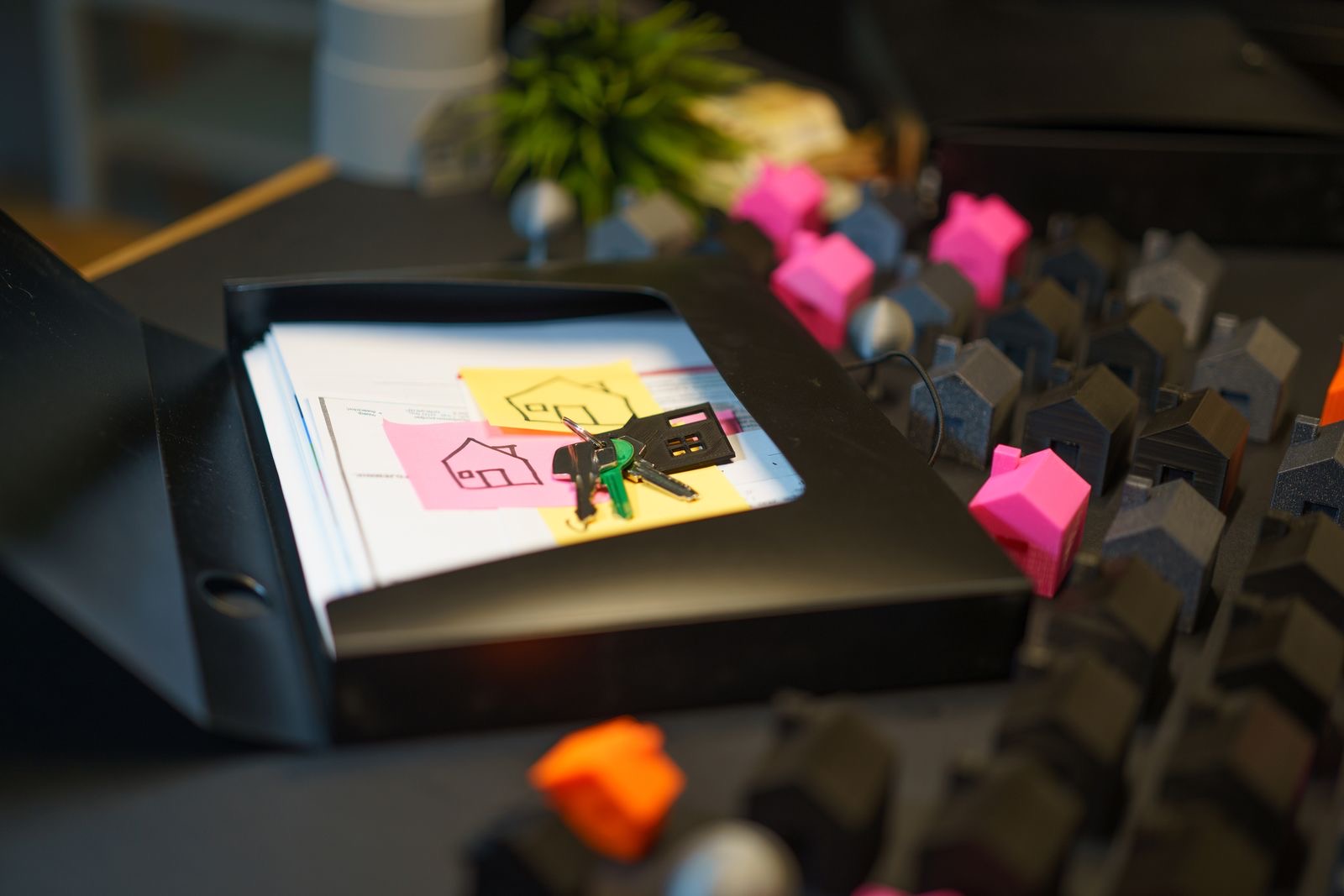
Municipal registration is made in person and by appointment, and is free; everyone who moved with you attends.

When must you register with the municipality, and what if you have no home yet?
The five-day duty and the stay that starts it
Under art. 2.38 lid 1 of the Wet basisregistratie personen (Wet BRP, consolidation of 1 October 2026), a person reasonably expected to stay at least two thirds of a half year reports in person to the municipality (gemeente) of their home address by the fifth day after the stay begins. Arithmetically, two thirds of a half year is four months, the line the RNI and KVK pages use. The official move checklist frames a stay of more than 90 days as emigrating; that is its own line, not the trigger of the duty, and no official page read says what someone staying between 90 days and four months does. The checklist asks for a valid identity document and proof of occupancy (a rental contract, a contract of sale or the main occupant's written permission). A breach can be fined up to EUR 325 (art. 4.17 sub a).
No home yet, a postal address and the host's responsibility
Without a home address, a person chooses a postal address (briefadres) and reports to the municipality of that address (art. 2.38 lid 1). The checklist adds conditions: the municipality decides whether to allow it, you show there is no other option, you need the main occupant's written permission and a copy of their identity document, and some municipalities refuse holiday homes. As the earliest appointment may be some time away, it suggests asking whether registration can run back to the day you booked. A resident who knowingly lets another person be registered incorrectly at their address faces the same EUR 325 ceiling (art. 4.17 sub b).
How do you get a BSN and a DigiD before you arrive?
Some founders need a BSN and a DigiD before they arrive, for example a sole proprietor preparing the KVK registration from abroad.
Register in the RNI
The registratie niet-ingezetenen (RNI, the non-residents records database) is for a person who lives abroad or stays under four months. It has 19 municipal desks, but per NetherlandsWorldwide's RNI page anyone who is not a Dutch, EU, Norwegian, Icelandic, Liechtenstein or Swiss national can register only at the desks in Breda and Venlo. In person, by appointment, free, with a valid passport or identity card.
Receive the BSN
The KVK says the BSN follows the RNI registration at once, and NetherlandsWorldwide says the desk hands over a letter with the number.
Activate a DigiD from abroad
NetherlandsWorldwide's route from abroad uses a collection code (valid 30 days), then an activation code given in a video call with NetherlandsWorldwide or at a DigiD desk (valid 21 days), then the activation itself.
When must you take out Dutch health insurance?
Under art. 2 lid 1 of the Zorgverzekeringswet (Zvw, the Health Insurance Act, as consolidated on 1 January 2026), whoever is insured by operation of law under the long-term care act must take out basic health insurance (zorgverzekering). If you are required to insure, a policy that starts within four months of the duty arising works back to the day the duty arose (art. 5 lid 5 sub a). The EU Immigration Portal says within 4 months following arrival.
The official move checklist adds three points: the duty holds even if you have insurance abroad, a person with no permanent address tells the insurer, and someone who cannot yet take Dutch insurance, for example while waiting for a permit, can use international insurance or their previous country's insurance. If you are still uninsured three months after a reminder, the CAK imposes a fine of three times the monthly standard premium (art. 9b Zvw); the 2026 euro amount is not given here.
The founder's own layer: a freelancer, and a director-shareholder not insured for employee insurance, pay the income-related Zvw contribution themselves, 4.85 percent for 2026 (5.26 percent for 2025), per the Belastingdienst's Zvw table.
Not sure which route's conditions you meet, or in which order to take the steps? Talk your situation through with us before you book appointments.
How do you register the business at the KVK as a newcomer?
What the KVK (Kamer van Koophandel) prints for a sole proprietor new to the Netherlands; the full walkthrough is in the KVK registration explainer.
- Only the owner registers. A sole proprietorship (eenmanszaak) is registered by its owner, logging in with their own DigiD; a friend, family member, bookkeeper, accountant or other intermediary cannot do it, but may help, per the KVK's eenmanszaak page.
- No DigiD yet. A non-Dutch owner who lives outside the Netherlands registers with the RNI first and receives the BSN at once; an owner who moves here registers in the BRP (next point).
- Working here for longer than 4 months. You must be registered in the BRP at a Dutch residential address, per the KVK's page for owners abroad.
- Staying fewer than 4 months. Registration is possible only with a Dutch visiting address, together with the RNI registration at your foreign address.
- Documents for the office route. An original paper extract from the foreign population register showing your residential address, no more than 2 months old, in Dutch, English, French or German (otherwise with a sworn translation), and legalised if the address is outside the EU.
- Timing. The appointment can be booked up to 8 weeks ahead. KVK passes your details to the Tax Administration, which writes to you within 2 weeks (of registration, per the KVK page for owners abroad; of your start date, per the eenmanszaak page).
- The fee. A one-off EUR 85.15 in 2026, the same for every legal form (art. 5 of the Financiële regeling handelsregister 2019, the Business Register fee regulation).
You register the business yourself; our page on setting up a Dutch sole proprietorship as a newcomer explains how we prepare the documents and the appointment with you and accompany you to it.
Why does every step depend on your address?
Every later step reads the address. The municipality needs proof of occupancy, or a postal address it may refuse. The BSN comes from that registration. The DigiD needs the BSN and the registered address. The KVK form needs the DigiD. The Business Register (Handelsregister) is linked to the BRP, so your residential address must be recorded correctly there, per the KVK's page on proof of address. Business.gov.nl's bank-account article says a KVK number is usually needed first and that no bank account number is needed to register; its start-up step plan lists the bank accounts at step 3, before the KVK registration at step 7. And municipal registration itself is tied to lawful residence (art. 2.38 lid 6 sub c Wet BRP).
Sources: Wet BRP, Wabb, DigiD, KVK, NetherlandsWorldwide, business.gov.nl.
Two checks belong before you sign anything: business.gov.nl advises checking that the tenancy agreement or mortgage allows a business at home, and the main occupant who gives written permission should know that knowingly letting an incorrect registration stand can be fined (art. 4.17 sub b Wet BRP).
Which comes first, the permit or the KVK registration?
The official sources give no single order for all founders, and one tidy sequence would be wrong for at least one of them; the table states what each source prints.
The order of the steps, per founder type. Sources: business.gov.nl's start-up step plan (read 3 October 2026), the Voorschrift Vreemdelingen 2000, the KVK, NetherlandsWorldwide. "Open" means no official page read settles it.
| Founder | What the sources print | What is settled and what is open |
|---|---|---|
| EU, EEA or Swiss | No permit; the step plan skips the permit steps; municipal registration is free and by appointment | The arrival chain, then the business chain; a sole proprietor needs a BSN and a DigiD before the KVK form |
| Non-EU, start-up permit | The step plan: residence permit (step 2), municipality (step 6), KVK (step 7); the Voorschrift Vreemdelingen 2000: no KVK registration, negative RVO advice | Both statements stand side by side; how a founder who needs an MVV registers a sole proprietorship before arriving is open |
| DAFT | Substantial capital is a condition of the permit | No IND page, policy rule or Staatscourant text fixing the order was found: open |
| Self-employed permit | The points test includes a business plan | The order against the KVK registration is not fixed in the sources read: open |
| Sole proprietor abroad who needs a BSN and a DigiD first | RNI desk in person (Breda or Venlo unless Dutch, EU, Norwegian, Icelandic, Liechtenstein or Swiss), then the BSN; DigiD by video call or at a desk | The chain as printed; no waiting time is published for any of the steps |
The start-up row rests on two sources: the state's start-up step plan (permit at step 2, KVK at step 7) and Annex 8b of the Voorschrift Vreemdelingen 2000 (VV 2000), under which RVO's advice is negative without a KVK registration. The sequencing of the facilitator, the KVK step and the application is what our start-up visa service explains and prepares; RVO advises and the IND decides.
Which deadlines start when you move, and what starts each one?
Three clocks share the first months and are easily merged. Five days: the time to report to the municipality, for someone expected to stay at least two thirds of a half year (art. 2.38 lid 1 Wet BRP). Four months: the line between the BRP and the RNI, the KVK's line between a BRP address and a Dutch visiting address, and the window in which a health policy still works back (art. 5 lid 5 sub a Zvw). Three months: an EU national's lawful stay on entry (art. 8.11 lid 1 Vb 2000), the GGD appointment after a self-employed permit, and the CAK's wait after a reminder (art. 9b Zvw).
Report to the municipality, for an expected stay of at least two thirds of a half year Art. 2.38 lid 1 Wet BRP
An EU national's lawful stay on entry Art. 8.11 lid 1 Vb 2000
GGD appointment within three months of a self-employed permit grant, where required EU Immigration Portal
CAK fine if still uninsured three months after a reminder Art. 9b Zvw
The line between BRP and RNI registration; at the KVK, a BRP address or a Dutch visiting address KVK; NetherlandsWorldwide
A health policy that starts within four months still works back to the day the duty arose Art. 5 lid 5 sub a Zvw
90 days is used in three ways here, and none is the registration trigger: the move checklist's line for a stay that counts as emigrating, the line above which a residence permit or MVV may be needed, and the IND's general decision period, extendable to a maximum of 6 months.
"90 days" is used in three ways in the official sources, and none is the registration trigger: the move checklist's line for a stay that counts as emigrating, the line above which a residence permit or MVV may be needed (the checklist and the IND), and the IND's legal decision period for regular temporary permits.
What does the state charge in the first months of 2026?
What the state charges in the first months (2026). Sources: the IND fee table 2026, the Wet BRP, the Financiële regeling handelsregister 2019, the Zvw and the Belastingdienst. Our own fees are not shown.
| Charge | Amount (2026) | When | Source |
|---|---|---|---|
| IND, first application: DAFT, start-up, self-employed | EUR 423 | With the application | IND fee table |
| IND, change of purpose from the start-up to the self-employed permit | EUR 423 | After the start-up year | IND fee table |
| IND, partner or family member, first application | EUR 254 | With the family application | IND fee table |
| IND, recognition as sponsor (the BV needs it as the employer of a highly skilled migrant) | EUR 5,080; EUR 2,539 for up to 50 persons | Before the employee's application | IND fee table |
| Municipal registration | Free | On arrival | Business.gov.nl step plan |
| Fine for breaching the registration duty | At most EUR 325 | Only on breach | Art. 4.17 Wet BRP |
| KVK registration, any legal form | EUR 85.15, once | At the KVK step | Art. 5 Financiële regeling handelsregister 2019 |
| CAK fine for staying uninsured | Three times the monthly standard premium; the 2026 euro amount is not given here | After the reminder and three further months | Art. 9b Zvw |
| Zvw contribution of an entrepreneur | 4.85 percent, income-related, not a one-off charge | With the tax assessment | Belastingdienst Zvw table |
The IND says its fees change every year on 1 January and are valid for the calendar year; the self-employed profit amount in the routes table is a half-year figure, valid from 1 July to 31 December 2026. No total is given, because the route, the family and the legal form differ. The notary's charge for a BV is outside this guide.
What follows the registration: the bank, your own pay and the first tax return?
The state's start-up step plan says a resident from outside the EU needs the BSN, a business-register extract and the residence permit for a personal account; for a business account, business.gov.nl's bank-account article says a KVK number is usually needed first. The bank decides; no account is promised. For the accounts in depth, read the bank account for a non-resident guide.
Paying yourself through a BV has a floor: the salary of someone who works for a company in which they hold a substantial interest must be at least the highest of three amounts, one of which is EUR 58,000 in 2026 (art. 12a lid 1 sub c of the Wet op de loonbelasting 1964, the Wage Tax Act).
The first tax return differs too. Per the official move checklist, a person who moves to the Netherlands files a special return for the year of the move, the M form, listing all income and assets; filing does not always mean paying Dutch tax on foreign income.

Does the 30 percent ruling apply to a founder?
The Belastingdienst describes the 30 percent facility as a scheme for an employee in paid employment who is recruited from outside the Netherlands. From 1 January 2027 the percentage falls from 30 to 27 (Staatsblad 2024, 434, amending art. 31a of the Wage Tax Act). Whether the facility can apply to a founder employed by their own BV is not settled in the official sources read. The question is taken further in our 30 percent ruling walkthrough.
From our practice
When we walk a moving founder through the order of steps, we check the address first: can it carry a municipal registration and, later, the Business Register entry? Then the BRP or RNI route, the BSN, the DigiD and the KVK appointment. The founder signs; the IND decides.
Sources
- Vreemdelingenbesluit 2000, arts. 8.11 lid 1, 8.12 lid 1 and 3.58 lid 1, consolidation of 25 September 2026, checked on 3 October 2026.
- Vreemdelingencirculaire 2000 (B), B6/2.5, the treaty route and the director-shareholder, checked on 29 September 2026.
- IND, required amounts and income requirements, the self-employed gross profit valid 1 July to 31 December 2026, checked on 29 September 2026.
- IND, decision periods, checked on 3 October 2026.
- Wet basisregistratie personen, arts. 2.38 and 4.17, consolidation of 1 October 2026, checked on 4 October 2026.
- NetherlandsWorldwide, registering in the non-residents records database (RNI), checked on 9 October 2026.
- Zorgverzekeringswet, arts. 2, 5 and 9b, consolidation of 1 January 2026, checked on 4 October 2026.
- KVK, registering a Dutch eenmanszaak and making an appointment, checked on 8 October 2026.
- KVK, registering a sole proprietorship if you live abroad, checked on 3 October 2026.
- Business.gov.nl, how to set up a startup in the Netherlands, the step plan, checked on 3 October 2026.
- Voorschrift Vreemdelingen 2000, arts. 3.20a and 3.20b and Annex 8b, checked on 29 September 2026.
- IND, fees, the 2026 fee table, checked on 29 September 2026.
Also cited by name in the text: the Wet algemene bepalingen burgerservicenummer, arts. 8 and 9; the Vreemdelingenwet 2000, arts. 2e and 8; WBV 2024/10 (Staatscourant 2024, 13488); the Financiële regeling handelsregister 2019, art. 5; the Wet op de loonbelasting 1964, art. 12a, and Staatsblad 2024, 434; the IND's pages on the MVV and on applying from abroad; business.gov.nl's pages on starting from abroad, the start-up permit, running a business from home and business bank accounts; the KVK's page on proof of address; the DigiD pages; NetherlandsWorldwide's move checklist and DigiD-abroad page; the EU Immigration Portal's page on self-employed workers in the Netherlands; the Belastingdienst's Zvw contribution table and 30 percent facility page.
Not sure yet where to begin? Talk through your route and the order of steps before you book appointments.